Use DiDi — China's equivalent of Uber, with a genuine English interface you switch on in the settings. Set your pickup pin, type or pick your destination, confirm the fare, and pay through Alipay or WeChat; your linked foreign card does the rest. The driver gets your Chinese destination on their screen, so the language problem simply never comes up. If you would rather not install a separate app, the same service runs as a mini-program inside Alipay.
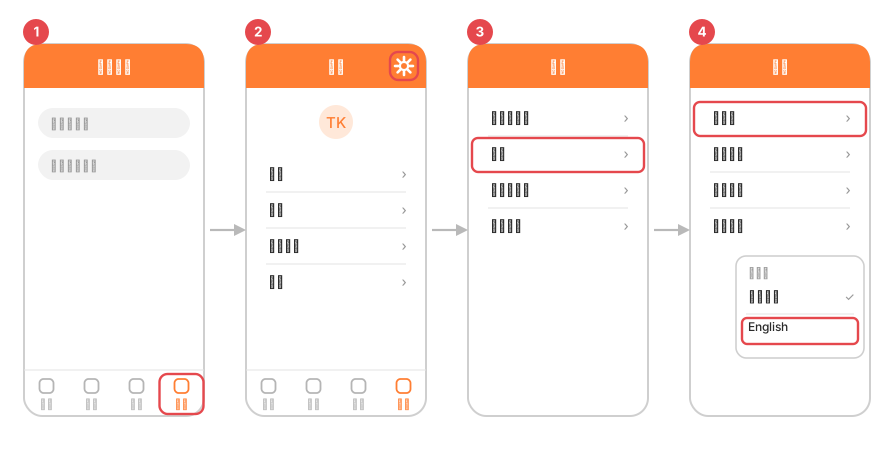
- Tap 我的 (Me) — the bottom-right tab.
- Tap the gear at the top right: 设置 (Settings).
- Tap 通用 (General). On some versions the next item sits directly under Settings.
- Tap 多语言 (Language), then English — the whole app switches at once.
Which one to install
The DiDi app is the fullest version: English, saved addresses, receipts, and the ability to book ahead. DiDi inside Alipay does the same job without a second registration, which matters if you have not managed to get a Chinese phone number — mini-programs run on the account you already have. For a short trip, the Alipay route is often the path of least resistance; for a long one, install the app.
Two more things worth knowing: Amap (the map app, see this page) has ride-hailing built into it, and Meituan does too. They all end up calling the same pool of cars, so there is no reason to install three. Pick one and learn it.
The order to do things in
Drop the pin where you actually are — not where the map thinks you are. This is where nearly every failed pickup happens, particularly at railway stations and airports, which have designated pickup zones that are not the terminal door. Zoom in, move the pin, and if the building has a named gate, use it.
Then the destination. Type it in Chinese if you have it — your hotel's front desk can write it for you, or the booking confirmation has it — or pick the place off the map. Names in pinyin sometimes work; English almost never does.
Then the car class. The cheapest tier is an ordinary sedan and is what you want most of the time. There are also premium tiers and a "drive my car" service where a driver takes your vehicle — the latter is what people use after a late dinner, and is a genuinely good idea.
Then wait where you said you were. The app shows the car's plate number, its colour, its model and its live position, and it counts down. Match the plate before you get in. You pay automatically at the end, in the app; there is no cash and no card machine, and the receipt lands in your account.
When the driver phones you
They will, sometimes, because the pin was ambiguous or the car cannot stop where you are. Do not panic — this is not a conversation you have to be able to hold. Three ways out, in order of usefulness:
Open the ride in the app and use the in-app message; the app translates. Or answer the call and say the one thing that matters — "hotel", "gate three", the name of the building — and hang up. Or, easiest of all, stand somewhere obvious and wave at the right number plate. Nearly every driver has done this before with a foreigner and knows exactly how it goes.
Street taxis
Traditional taxis still run, meter legally, and are fine. You will rarely get English out of the driver, so show the destination in Chinese characters on your screen and go. From a rank at a station, agree nothing and pay the meter. If a driver refuses to use the meter, get out and take the next one — that is not normal here and you do not have to argue about it.
Questions I get on this one
Do I need a Chinese phone number?
How do I pay?
Is it safe?
Do drivers speak English?
What if I leave something in the car?
From booking these for guests constantly. App interfaces change; if a screen has moved since I wrote this, tell me. Related: metro and buses · map apps · all the apps · all essentials